

Final Testing on an American Bosch 6-Cylinder Injection Pump
10th September 2026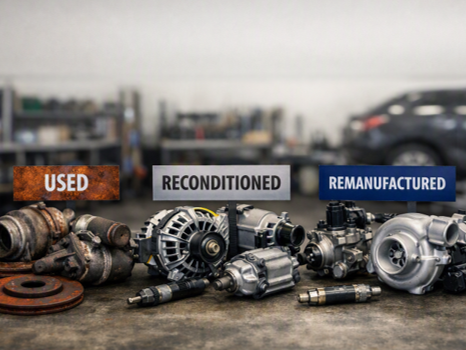
When it comes to repairing a vehicle, motorists are often presented with several part options. Used, reconditioned, and remanufactured components all play important roles in the UK automotive market, but the differences between them are not always clear. Understanding how each type is produced, tested, and supplied can help drivers make confident decisions about the parts fitted to their vehicles, especially as repair costs and vehicle complexity continue to rise.
Used Parts:
Used parts are components that have been removed from another vehicle and sold in the same condition they were found. They are typically sourced from breakers yards, salvage vehicles, or dismantlers. These parts are not rebuilt or tested beyond a basic visual inspection, which means their condition can vary widely.
For many motorists, used parts offer a cost-effective option for non-critical repairs, especially on older vehicles. They can be a practical choice when a part is difficult to find new or when a quick fix is needed. However, because used parts are not restored or tested to any formal standard, their lifespan and performance may be unpredictable. This does not make them a bad option, but it does mean they are best suited to repairs where reliability is less critical.
Reconditioned Parts:
Reconditioned parts sit between used and remanufactured components. A reconditioned part is cleaned, inspected, and repaired as needed, but it is not fully rebuilt. Only the worn or damaged elements are replaced, and the rest of the component remains in its original state.
This process can improve reliability compared with a used part, and reconditioned components are often supplied by reputable workshops that follow consistent procedures. However, because the part is not completely stripped down or rebuilt, its performance may still depend on the condition of the original core. Reconditioned parts can be a good option for certain repairs, but they do not offer the same level of assurance as a fully remanufactured unit.
Remanufactured Parts:
Remanufactured parts are rebuilt to a defined standard that aims to match the performance of a brand new component. During remanufacturing, the part is completely stripped down, cleaned, measured, and restored using specialist equipment. Any worn or out-of-tolerance components are replaced, and the finished unit is tested thoroughly before being supplied.
This process is far more detailed than reconditioning, and it results in a part that is consistent, reliable, and ready for installation. Remanufactured components are widely used across the UK automotive sector, including by insurers and professional workshops. They offer strong value for money, shorter lead times compared with new parts, and dependable performance, making them an excellent choice for modern repairs.
Why These Differences Matter:
As vehicles become more advanced, the cost of new components continues to rise. Turbochargers, injectors, electronic control units, and other specialist parts can be expensive to replace, and long lead times can delay repairs. This is one reason remanufactured parts have become increasingly popular. They provide a practical solution that balances quality, affordability, and availability.
Used and reconditioned parts still have their place, especially for older vehicles or non-critical repairs. However, for most modern engines and systems, remanufactured components offer the strongest combination of reliability and value. They also support the circular economy by reducing waste and extending the life of existing materials, which is an important benefit for both motorists and the wider industry.
Choosing the Right Option:
The best part choice depends on the type of repair, the age of the vehicle, and the expectations of the driver. Used parts can be suitable for simple fixes, reconditioned parts offer a middle ground, and remanufactured components provide a high-quality alternative to new parts without the high cost.
With more garages and insurers recognising the advantages of remanufactured units, motorists can feel confident that these components are a dependable and sustainable option. As the UK automotive sector continues to evolve, remanufactured parts are well positioned to support efficient, affordable, and environmentally responsible repairs for years to come.